Where does your paycheck actually go?
A two-minute checkup that finds the money that keeps disappearing
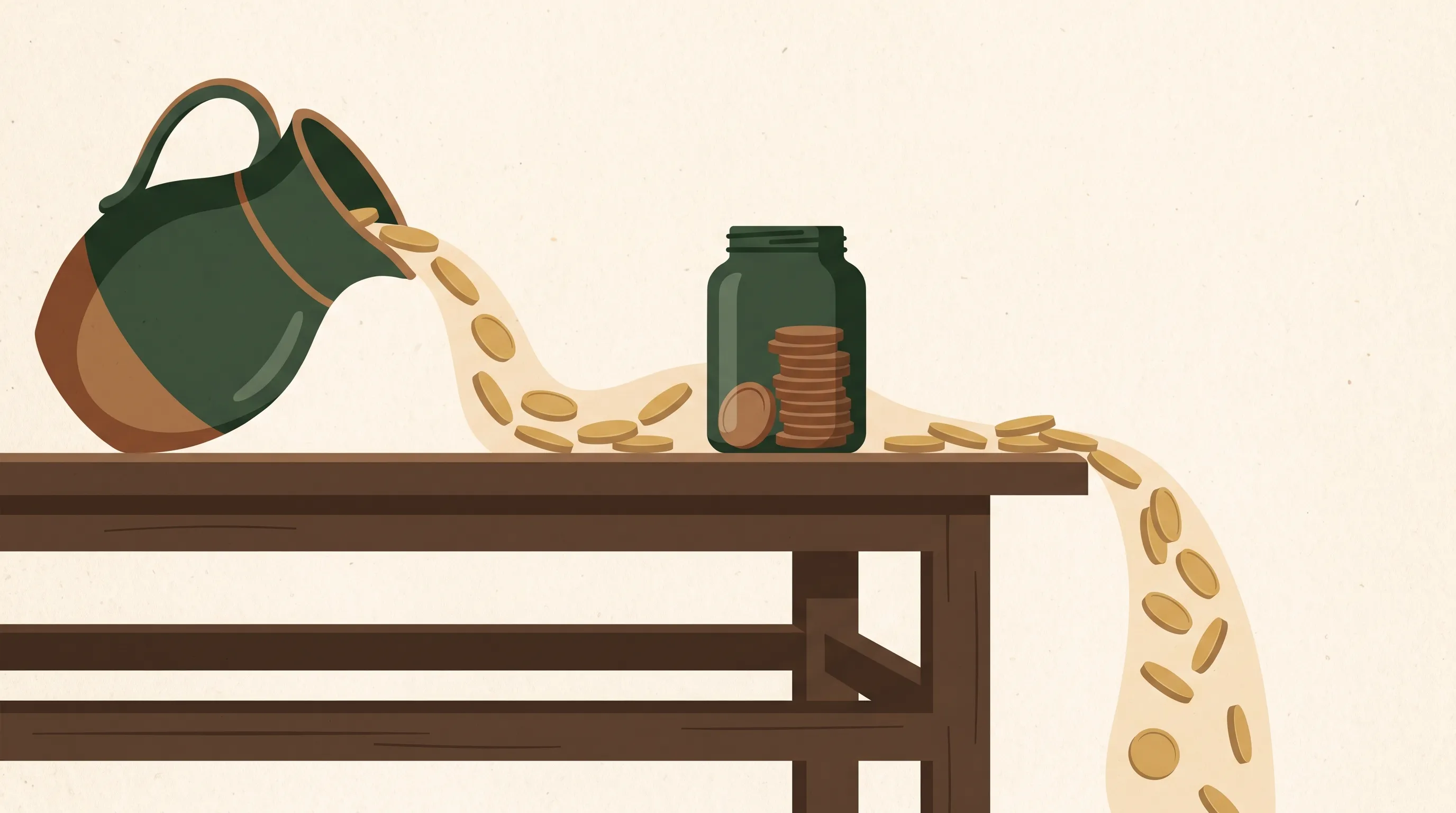
Here’s a quiet mystery almost everyone lives with. Money comes in every month. Money goes out every month. And somewhere in the middle, without any single big purchase you can point to, a chunk of it simply disappears. You didn’t buy a boat. There was no emergency. And yet.
Ask most people what they earn and they’ll answer within a few dollars. Ask what they spend and you’ll get a pause, a guess, and a nervous laugh. If you’ve ever done the Sunday night scroll through your banking app, wondering how it’s only the 28th and the account already looks like this, you know the feeling. That gap is where most money trouble lives. It’s also where every money fix starts, because you can’t steer what you can’t see.
The two-minute checkup
We built a free tool for exactly this: the Monthly Cash Flow Snapshot. It runs right in your browser. Nothing you type is saved or sent anywhere, there’s no account to make, and it asks for just six numbers:
- Monthly take-home income. What actually lands in your account after taxes, not your salary on paper.
- Housing. Rent or mortgage.
- Other essentials. Food, utilities, transport, insurance.
- Debt payments. Cards and loans, beyond the mortgage.
- Lifestyle and fun. Dining out, subscriptions, the discretionary stuff.
- Savings and investing. What you deliberately set aside each month.
Don’t chase perfect numbers. Open your banking app, squint at last month, and round to the nearest hundred. Close is plenty. The point isn’t accounting, it’s a mirror.
A quick example
Say your month looks like the example the tool loads with: $6,000 comes in after taxes. Housing takes $1,800, essentials $1,200, debt payments $500, lifestyle $800, and you deliberately save $700. That’s $5,000 going out with a job to do.
The snapshot hands you back two numbers. First, $1,000 left over: money that came in, wasn’t spent, and wasn’t saved on purpose. Second, a 12% savings rate: the share of your income you’re deliberately keeping.
How to read your two numbers
The leftover is the interesting one. It’s unassigned cash, and unassigned cash has exactly two futures: it piles up, or it quietly vanishes into the same mystery you started with. If you’ve ever reached the end of the month wondering where a thousand dollars went, you’ve met your leftover. Annualized, that’s $12,000 a year wandering around without a job.
If your leftover comes out negative, that’s the first thing to fix, and it’s almost always hiding in the two or three biggest categories. It’s the rent, the car, the debt payments. It is almost never the coffee.
The savings rate is the long-game number. Over a working life, it tracks where you end up more closely than your income does, because two people can earn identical paychecks and retire in completely different shape. Earning more only helps if more of it stays.
A useful yardstick is the old 50/30/20 rule of thumb: roughly half your take-home for needs, 30% for wants, and 20% deliberately saved. Our example person lands at 58% needs, 13% wants, and 12% deliberate saving, with another 17% just drifting. They don’t have a spending problem, they have an assignment problem. The money to reach 20% is already there. It’s the leftover.
What to do with what you find
Three moves, in order:
- Give the leftover a job. An automatic transfer on payday, even a small one, turns vanishing money into deliberate money. You can always adjust it later.
- Nudge the rate, don’t overhaul the life. Moving from 12% to 15% on this income means finding $180 a month. Invested at 7%, that one nudge grows to roughly $146,000 over 25 years. Jumping to 40% overnight usually snaps back by March.
- Run it again next season. Two minutes, four times a year. The trend matters more than any single month.
If you want to see what that steady monthly amount could become, the compound interest calculator will show you. And for where this sits in the order of money decisions, start with personal finance basics.